When planning an event, the question "how many watts?" tells you almost nothing. What matters more is the size and shape of the audience area, the distance from the stage to the last row, the character of the space and what has to be heard – music, speech or both.
Outdoors: throw and weather
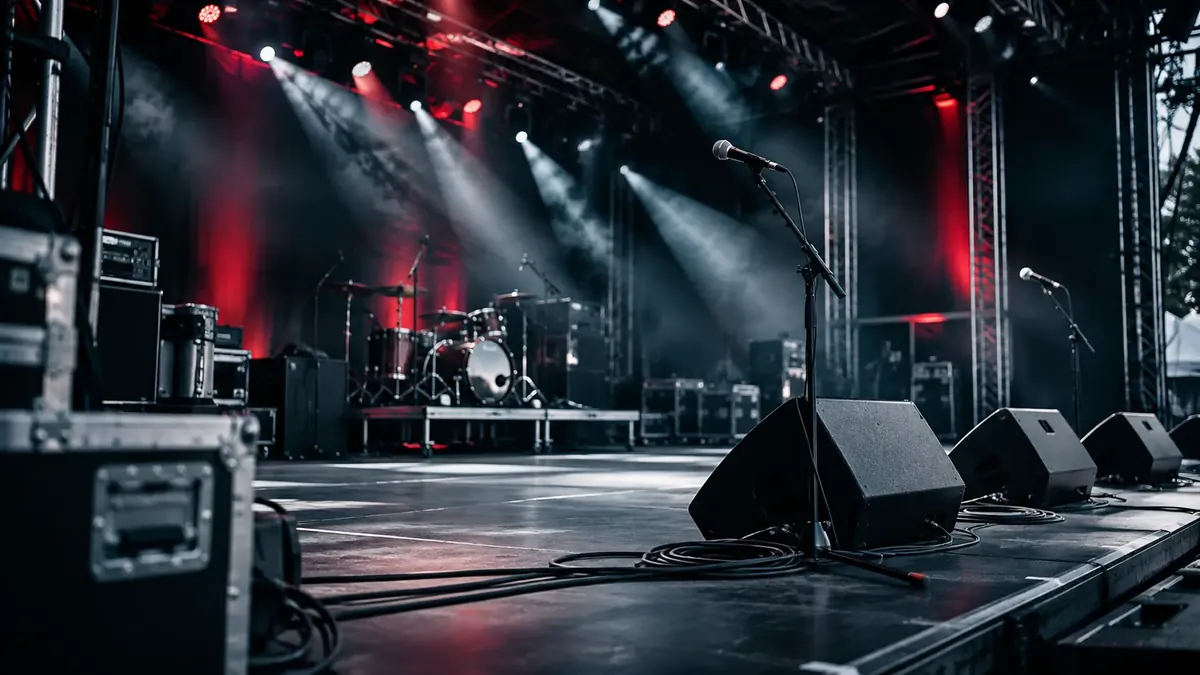
In the open air there are no wall reflections that help fill the space with sound, as they do indoors. The system has to deliver the energy to the back rows on its own, and level drops noticeably with distance. That is why line arrays are used outdoors – they allow coverage to be shaped over long distances.
- Wind and temperature affect how sound travels, especially over long distances.
- Delay towers support the main system further back when the audience is very large.
- Neighbours – outdoors, sound carries far. Check local requirements and quiet hours in advance.
- Equipment protection – a covered stage and FOH position, and protected cabling and power.
Indoors: controlling reverberation
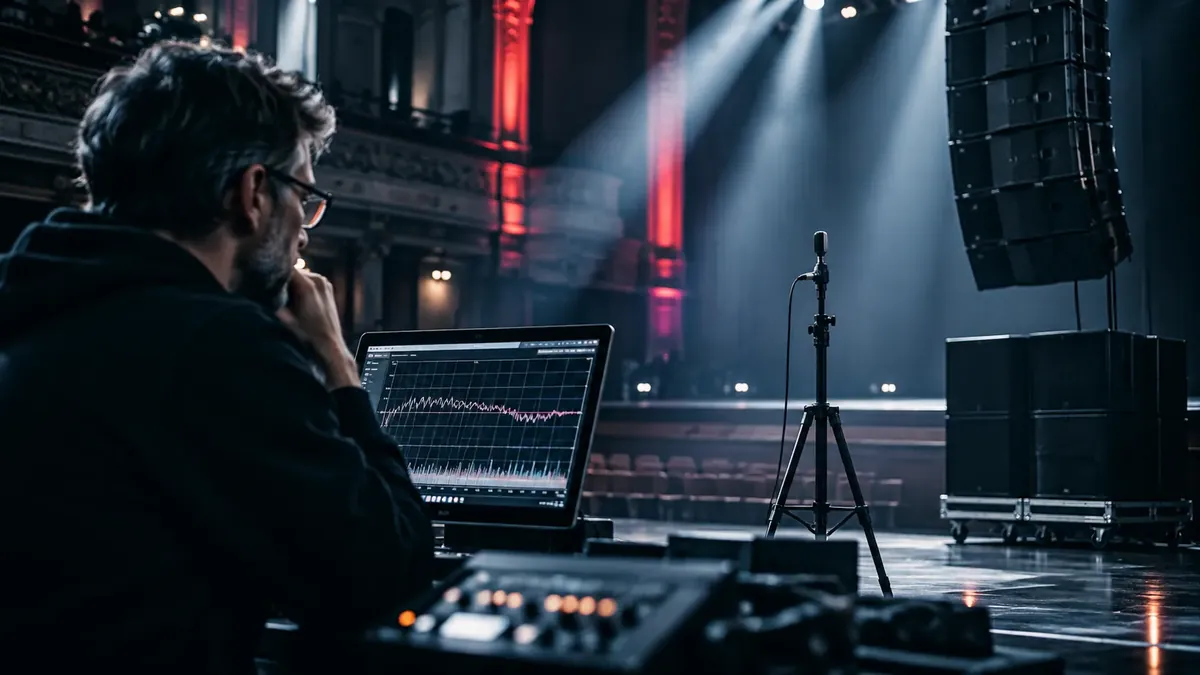
Indoors the problem is the opposite: sound reflects off walls and roof, and excessive reverberation blurs both music and speech. The key is to direct the energy at the audience and as little as possible at reflective surfaces. Systems with controlled directivity, proper flying and measurement in the actual venue all help.
System scale
For reference, our inventory includes systems of different sizes: from compact L-Acoustics SYVA and 5XT, through ARCS II, to the KARA II line array with KS21 subwoofers. The choice depends on the audience and the programme, not on which system is "the biggest". Too large a system means unnecessary cost; too small means no headroom and distortion.
Wireless microphones at large events
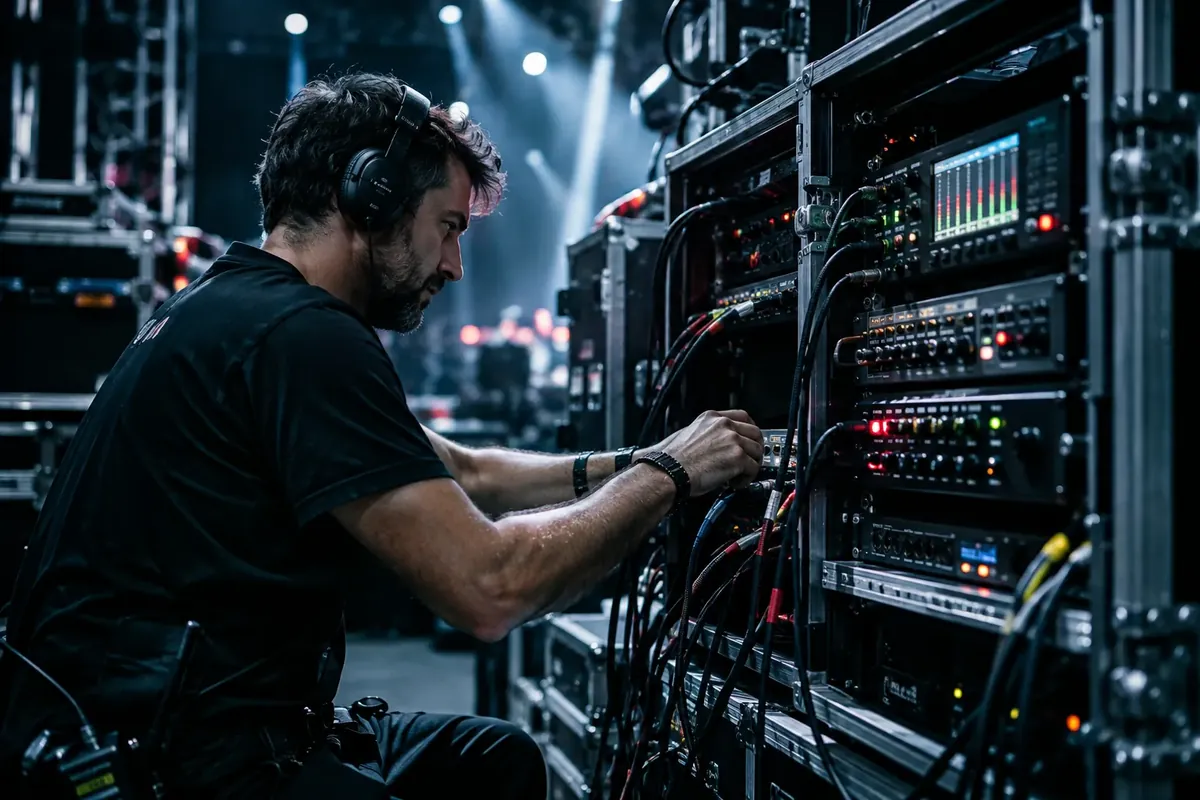
At a festival or a large gala, several crews' wireless microphones, in-ear systems, intercoms, video links and attendees' phones all operate in the same place. Without a plan, interference or dropouts at the key moment are easy. Good practice is:
- A frequency plan before the event – covering all technical crews and local spectrum regulations.
- An on-site spectrum scan – radio conditions at the venue may differ from assumptions.
- Antennas in the right place – with line of sight to the stage, not behind a structure or inside a case.
- Spare channels and transmitters for key performances.
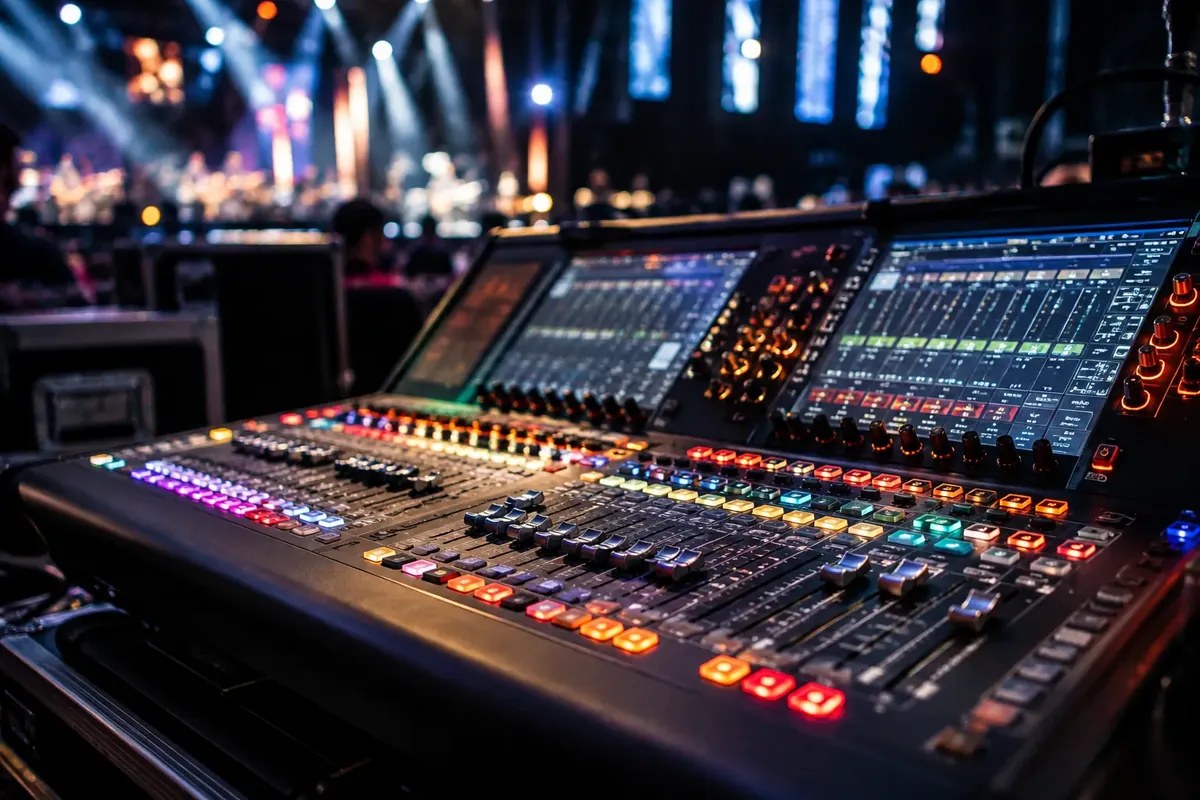
- Monitoring during the show – the engineer sees the signal level and battery status of every transmitter.
We work with Shure Axient Digital, Sennheiser EW 500 G4 and Sennheiser EW IEM G4 in-ear monitoring – and we treat frequency coordination as part of system design, not a last-minute task.
Where to start
The simplest way is an enquiry with the basics: venue, expected audience, programme and date. On that basis we will propose a system and scope of service – and for larger events, a site visit.